There’s a growing gap between the kinds of moments Gen Z romanticizes and the ones they actually get to experience. Feeds are filled with clips of carefree bike rides, pickup games that turn into friendships, and crowded living rooms pulsing with live music—but for many, those moments feel just out of reach. Vicarious nostalgia doesn’t just reflect a longing for the past; it highlights a present-day problem: it’s become harder to spontaneously find, create, and join real-world experiences.
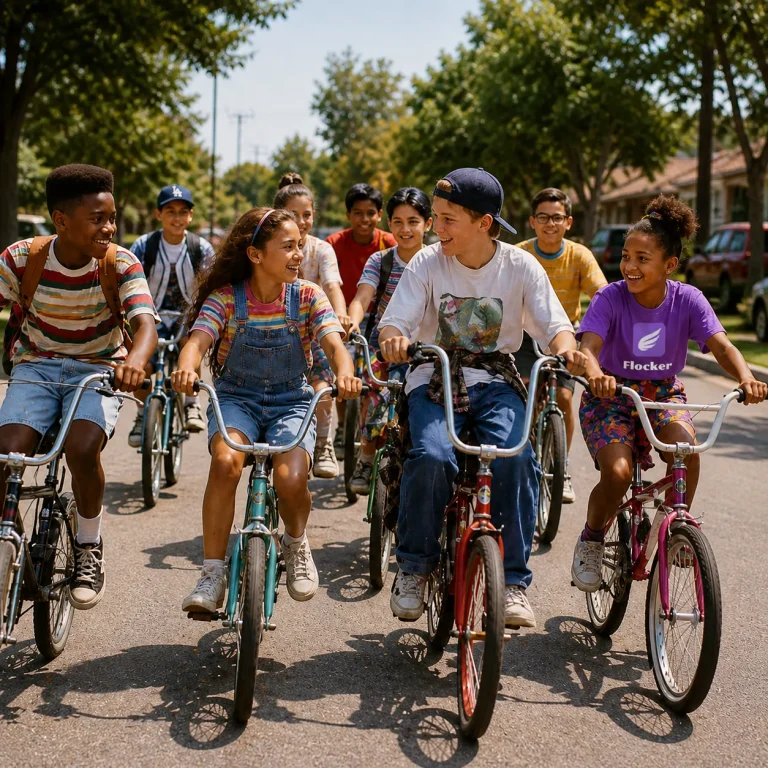
Flocker is designed to close that gap. Instead of passively consuming the feeling of connection through a screen, Flocker makes it easy to bring those moments to life—by helping people host, discover, and show up to events happening around them. Whether it’s something planned or last-minute, big or small, Flocker turns the idea of “I wish I was there” into “I’ll be there.”
Understanding Gen Z and Vicarious Nostalgia
Earlier generations typically experience nostalgia as a reflection on their own past, but Gen Z frequently connects with a different kind—often called “vicarious nostalgia”—where the sense of longing comes from moments they never personally lived, but instead discovered through digital content (Jain et al., 2025; Sedikides et al., 2008).
Research has shown that Gen Z is drawn to the quality, simplicity, authenticity, and rejection of overstimulation associated with vicarious nostalgia (Neave et al., 2026; Gao & Jin, 2026). While many brands try to tap into this sense of nostalgia as a marketing strategy, few genuinely reflect the values or experiences they promote. Flocker, however, is built around these principles, with a design and mission that authentically embrace them and extend beyond them.

Bringing Those Moments to Life
Flocker is built to turn the moments people only see on their screens into experiences they can actually live. It’s about lowering the barrier between wanting to do something and making it happen—giving Gen Z a sense of spontaneity, ownership, and freedom that often feels out of reach in a highly digital, overstimulated world. At the same time, it reintroduces something familiar for those who remember it: the ease of gathering, the joy of unplanned connection, and the feeling that something fun is always just around the corner.
With Flocker, creating and finding these experiences becomes simple and immediate. What used to require group chats, planning, and uncertainty can now happen in a few taps. A casual idea—riding bikes around town, starting a pickup basketball game, or hosting a small show—can quickly turn into a shared experience with real people in your community.
Imagine deciding, on a random afternoon, that you want to ride bikes with a group and watching that idea come to life as others nearby join in. Or putting together a last-minute game and meeting new people who show up ready to play. Whether you’re promoting a local gig, inviting people to an art show, or just looking to spend time outside with others, Flocker makes it easier to connect over shared interests and create something meaningful in real time.
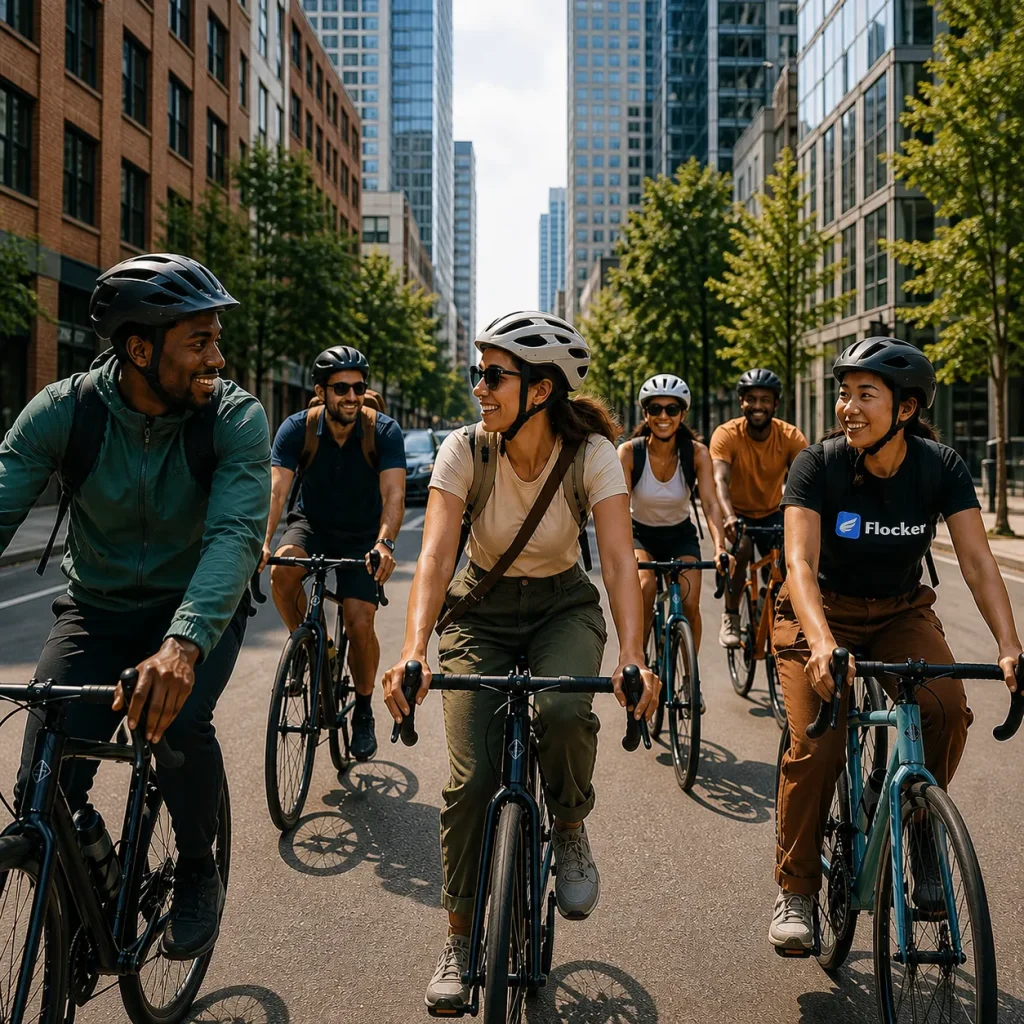
At its core, Flocker isn’t just about events—it’s about restoring a sense of possibility. It transforms passive scrolling into active participation, helping people move from observing moments to actually living them. The result is more than just something to do; it’s a way to build community, create memories, and experience the kind of connection that so many have only encountered through a screen.
Join the Movement
Flocker is about more than an app—it’s about changing how people show up for their lives and for each other. Join the Flocker waitlist today and be among the first to know when the app drops.
References
Gao, M., & Jin, Z. (2026). Nostalgic Gastronomic Spaces: The Impact of Perceived Authenticity and Nostalgia on Young Consumers’ Repurchase Intentions—A Case Study of Changsha Wenheyou. Sage Open, 16(1). https://doi.org/10.1177/21582440251395661
Jain, T., Mishra, V. K., & Kothari, D. (2025). Digital Nostalgia Marketing: How Past-Centric Ads Affect Gen Z Consumption. Advances in Consumer Research, 2(4), 4279-4291.
Neave, C., Freemantle, H., & Lappeman, J. (2026), ““But you weren’t there!” – Effects of historical nostalgia on young consumers”. Journal of Consumer Marketing, 1-15. https://doi.org/10.1108/JCM-12-2024-7467
Sedikides, C., Wildschut, T., Arndt, J., & Routledge, C. (2008). Nostalgia: Past, present, and future. Current Directions in Psychological Science, 17(5), 304–307. https://doi.org/10.1111/j.1467-8721.2008.00595.x