Home » Blog » When Did Social Media Stop Being Social? Flocker and Real-Life Connection
When Did Social Media Stop Being Social? Flocker and Real-Life Connection
Remember when social media first came out? It was supposed to help us connect—bringing friends, communities, and shared experiences closer together. Somewhere along the way, that purpose shifted.
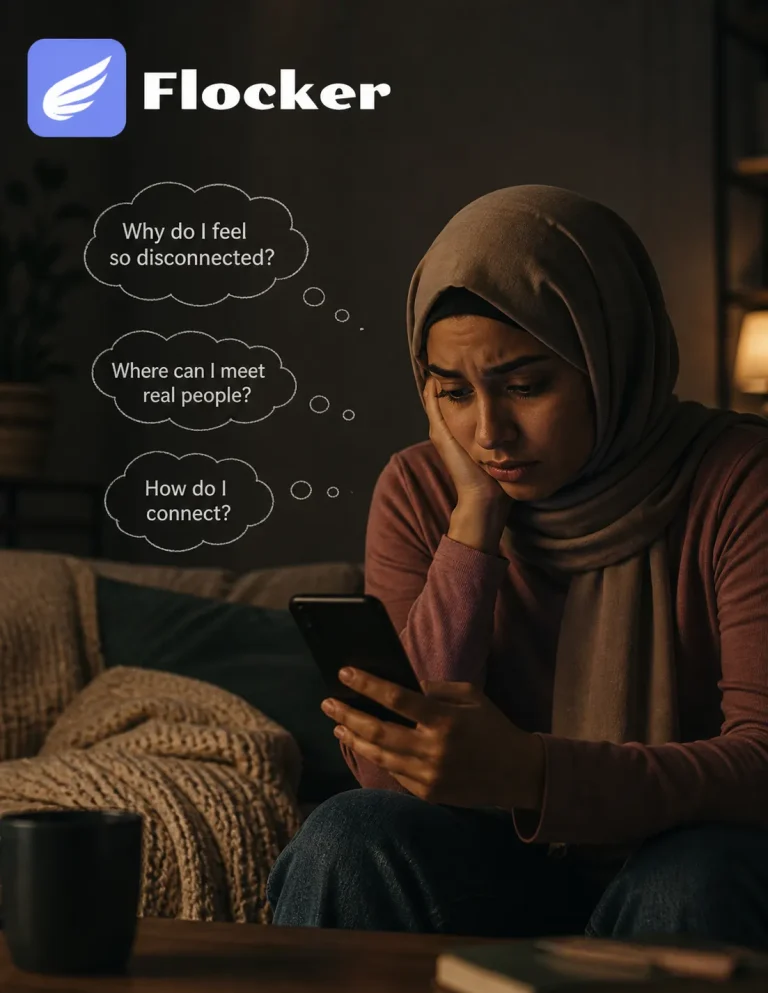
Today, social media often replaces real-life interaction instead of enhancing it. Rather than using it as a tool to connect offline, many people use it to avoid in-person experiences altogether—curating versions of themselves for public consumption. A direct message here or a comment there might offer brief interaction, but it rarely feels truly personal.
What was once technology designed to bring people together now often creates distance. Major platforms profit from keeping users engaged for as long as possible, relying on algorithms that thrive on attention. The more time people spend scrolling—often feeling isolated or disconnected—the more valuable they become to these systems. It raises an uncomfortable question: how do we break out of this cycle?
The Research Behind the Disconnect
Emerging research increasingly highlights the mental health consequences of excessive social media use. Studies show that overuse and addiction are linked to higher rates of depression, loneliness, reduced real-life social interaction, and overall declines in mental well-being (Santini et al., 2025).
At the same time, usage patterns continue to intensify. One in three adults in the United States reports being online “almost constantly,” underscoring just how embedded these platforms have become in daily life (Wiederhold, B. K., 2025).
The impact becomes even clearer when looking at time spent online. Compared to individuals who limit their social media use to around 30 minutes per day, those who spend more than two hours on these platforms nearly double their odds of experiencing social isolation (Wiederhold, B. K., 2025).
A Better Way Forward
If the problem is how we use technology, the solution isn’t to abandon it—it’s to redesign it with intention.
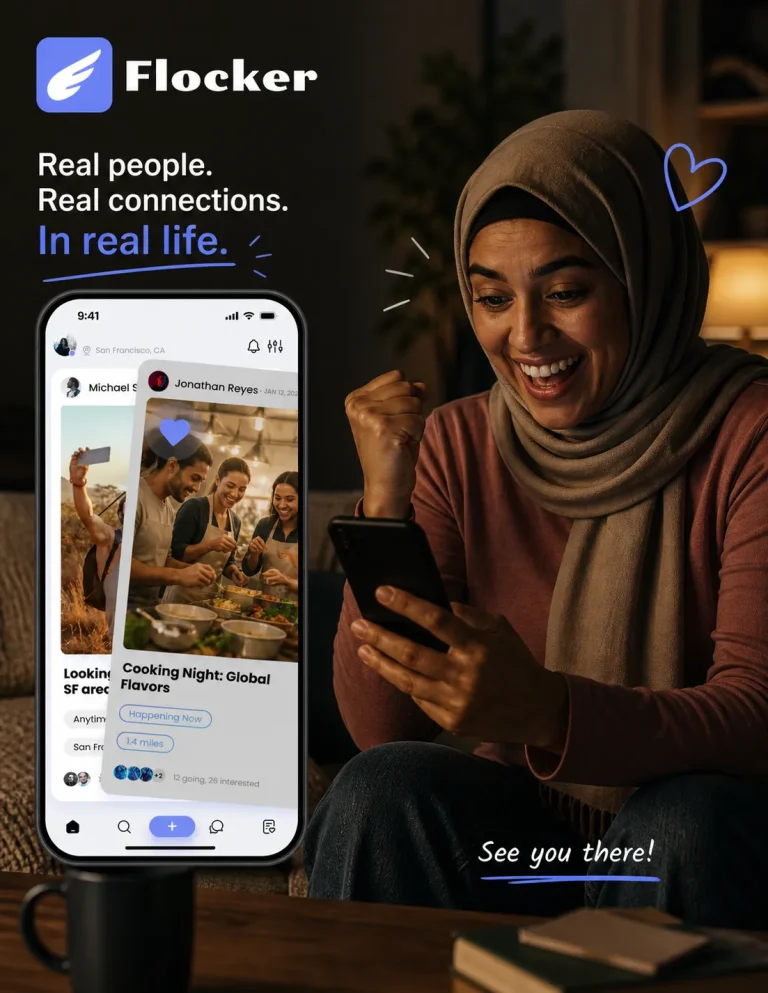
Flocker is built around that idea. As a mission-driven company focused on improving mental health and advancing suicide prevention, Flocker helps people reconnect in real life. Instead of keeping users stuck on their phones, the platform is designed to do the opposite—get you on just long enough to get you off of it.
With Flocker, anyone can create, discover, and join local events that align with their interests. Whether it’s meeting new people, spending time with friends, or building a sense of community, the goal is simple: make real-life connection easier and more accessible. At the same time, users stay in control of their privacy—choosing how they show up, what they share, and when they engage.
Reclaiming Connection
The research is clear: reducing time on social media can strengthen relationships and improve mental health, particularly among university students (Osman, W. A., 2025). But more importantly, it opens up space for something better—genuine, in-person connection.
Technology doesn’t have to pull us apart. Used intentionally, it can bring us back together.
Flocker is built to make that shift possible.
Join the Movement
If you’re ready to spend less time scrolling and more time actually living, now’s the time to make the change.
Join Flocker’s waitlist and be part of a community designed to bring people back together—in real life.
References
Osman, W.A. Social media use and associated mental health indicators among University students: a cross-sectional study. Sci Rep 15, 9534 (2025). https://doi.org/10.1038/s41598-025-94355-w
Santini, Z.I., Thygesen, L.C., Andersen, S. et al. Social Media Addiction Predicts Compromised Mental Health as well as Perceived and Objective Social Isolation in Denmark: A Longitudinal Analysis of a Nationwide Survey Linked to Register Data. Int Journal Mental Health Addiction 23, 3136–3153 (2025). https://doi.org/10.1007/s11469-024-01283-3
Wiederhold, B. K. (2025). Alone Together: The Paradox of Digital Connection and Social Isolation. Cyberpsychology, Behavior, and Social Networking, 28(3), 144-146. https://doi.org/10.1089/cyber.2025.0034