The Rise of “Maybe Culture”
... and Why Nobody Commits to Plans Anymore
There’s a new phase of modern social life and nobody officially named it, but we’re all living in it.
It’s called Maybe Culture.
You know it well. You didn’t sign up for it. There was no onboarding process. One day you were just in a group chat saying:
“I’m down.”
Then “Let me see how I feel.”
… Then “Keep me posted.”
And then again “Maybe.”
And finally “I’ll let you know.”
And somehow, despite everyone expressing interest, nobody ever picks a time, a place, or a date.
A week later, the plan quietly evaporates.
Maybe Culture isn’t really about people refusing to socialize. It’s a social dynamic where everyone agrees that hanging out sounds great, but nobody wants to close the loop. Plans live in a permanent state of possibility: never fully accepted, never fully rejected.
Schrödinger’s hangout. The event is both happening and not happening until someone finally checks the group chat.
How We Got Here
Before we start blaming an entire generation, it’s worth acknowledging something:
Gen Z didn’t create the environment that led to Maybe Culture.
They inherited it.
This is the first generation that grew up in a world of unlimited options.
Unlimited entertainment.
Unlimited communication.
Unlimited notifications.
Unlimited opportunities to compare what you’re doing against what everyone else appears to be doing.
For most of human history, if your friend asked if you wanted to grab dinner on Friday, that was the plan.
Now every plan exists alongside a hundred other possibilities.
Maybe another invitation comes up.
Maybe you’re exhausted after work.
Maybe you need a quiet night.
Maybe something better will appear.
Maybe.
When every option stays available until the last possible second, committing to one thing starts to feel strangely difficult.
Not because people don’t care.
Because keeping options open has become the default setting.
The Group Chat Problem
Group chats were supposed to make planning easier.
Instead they became:
- someone reacting with 🔥
- 3 people saying “lol I’m down”
- a couple people suggesting a time that gets ignored
- 1 person desperately trying to revive the thread like they’re CPR-certified for social plans
- and one plan that shrivels up and dies quietly while everyone agrees it was “definitely a good idea though” or ghosts entirely
No one is the villain. The system just doesn’t resolve.
It’s like democracy, but for going to a bar.
And somewhere along the way, we developed a new social ritual:
“We should totally do that sometime.”
Not as a concrete plan.
Not as a question.
Almost as a social gesture.
Everyone agrees the idea sounds fun. Nobody opens their calendar. Nobody picks a date. The conversation moves on.
The intention is genuine.
The follow-through just never arrives.
At Some Point, "Maybe" Became a Lifestyle
A group of adults with tiny supercomputers in their pockets can order food, summon a car, transfer money across the globe, and generate a photorealistic video of a kitten delivering a pizza to your door in a propeller hat and flying away in under 10 seconds.
But somehow:
“Do you guys want to get drinks Friday?”
has become one of the last and largest issues technology has not been able to solve.
Nobody knows who should pick the place.
Nobody knows who should pick the time.
Nobody wants to commit too early.
Nobody wants to commit too late.
Everyone wants plans.
Nobody wants the responsibility of creating plans.
It’s like watching a room full of people stare at a door they’re all allowed to open but they’re all going “not it!” or “but… can you do it?”
And to be fair, there are reasons for that.
Nobody wants to be the person who organizes something only to get hit with:
“Actually I can’t make it.”
“Wait I forgot I have something.”
“Can we do next week?”
“Can we do literally any other time?”
So instead of risking rejection, we create a social middle ground where nothing is rejected because nothing is ever fully proposed.
Which is a pretty clever solution if your goal is to avoid discomfort.
It’s a terrible solution if your goal is to actually leave your apartment.

The Mental Health Bit Nobody Talks About
There’s another layer to this.
A lot of Maybe Culture comes from genuinely good intentions.
Gen Z is arguably more aware of burnout, mental health, and personal boundaries than any generation before it.
That’s not a bad thing.
People are trying to protect their peace.
They’re trying not to overload themselves.
They’re trying to leave room for rest when life gets overwhelming.
The problem is that uncertainty can become a habit.
Sometimes “maybe” starts as a healthy attempt to avoid overcommitting.
Over time, it becomes a default response to everything.
The result is a strange paradox:
People want connection.
People value friendship.
People care about their relationships.
Yet everyone is waiting for certainty before committing…
… while certainty never arrives because nobody commits.
The Real Issue: Coordination Broke
We don’t actually have a “people problem.”
We have a coordination problem.
Everyone wants to: see their friends, meet new people, do something fun, be invited out
But the path from wanting something to actually doing it is clogged with friction:
- scheduling chaos
- decision fatigue
- too many options
- awkward planning responsibility
- wanting to protect one’s mental health
- fear of rejection
- worry over overcommitting
- fear of missing out on something else
So, plans don’t fail because people don’t care.
They fail because the systems we’re using to organize social life weren’t built for the way modern life actually works.
That role of being the “planner” suddenly carries all the responsibility and all the risk.
It’s like being the first penguin into the water.
Noble, yes. But stressful.

This Is Where Flocker Comes In
Flocker exists because social life shouldn’t require project management skills.
It’s being built around a simple idea:
If people want to do things in real life,
the system should help them actually do it…
… not prevent it by trapping them in a dopamine dripping loop designed to make Big Tech big money.
The goal is to help folks like you:
Not just talk about it.
Not just react to it.
Not just support the vague idea of it in a group chat that will be dead by tonight.
But instead help turn:
“We should hang out sometime.”
into
“This is happening. Come through.”
The goal isn’t to force people into plans.
It’s to make real-world connection easier to discover and easier to act on.
Because friendship shouldn’t require a Masters degree in logistics management.
And meeting new people shouldn’t feel as emotionally taxing as applying for a job.
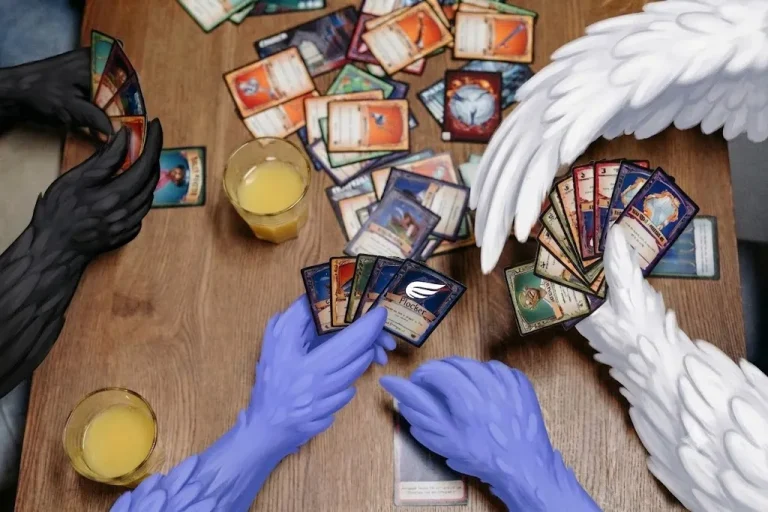
Whether you’re looking for a pickup basketball game, a study session, a board game night, a walking group, a play with clay night, or just people who are actually doing something tonight, Flocker is being built to remove the friction between intention and action.
Open the Flocker app → Find exactly what you want to do when you want to do it → Go.
The Point
Maybe Culture isn’t a character flaw.
It’s not laziness.
It’s not proof that Gen Z doesn’t want friends.
If anything, it’s the byproduct of a generation trying to navigate unlimited options, constant connectivity, social pressure, and a growing awareness of mental health– all at the same time.
People aren’t less social.
They’re stuck in systems that make socializing harder than it should be.
And until that changes, we’ll keep living in the endless loop of:
“I’m down.”
“Same.”
“We should definitely do something.”
“For sure.”
*deafening silence*
Flocker is trying to fix that last line.
If you’re tired of plans that exist mostly as ideas, group chats that never leave the planning stage, and a social life that’s perpetually “almost happening”: join the waitlist.
Because “we should hang out sometime” has had a pretty good run.
Maybe it’s time for something that actually happens.