
There was a time when making plans required very little technology. You called someone. You walked somewhere. You showed up. Maybe you knew the party was happening because a friend told you about it, or because you happened to run into someone on the street who was heading there. The limitations were obvious, but they also made social life feel somewhat accidental. You couldn’t see everything that was happening, and you certainly didn’t always know where everyone was. People could go out, change plans, disappear for the night and come back with a story.
The internet changed that. First it made communication instantaneous, then it made information abundant, and eventually it gave us the ability to see almost everything happening everywhere, all the time. Social media was supposed to make us feel closer to one another. In some ways, it did. But it also created a strange new version of social life in which being informed about other people’s lives can substitute for being involved in them.
You can know that your friend went out last night without having been invited. You can watch a concert from someone’s phone while sitting at home. You can discover a new restaurant through someone else’s dinner, follow a party as it unfolds through stories, and find out what your entire social circle is doing without ever actually seeing any of them.
And somewhere along the way, privacy became less of a default.
Knowing where someone is used to require asking them. Now it can be inferred from a story, a tagged location, a post, a shared map, or simply the fact that they’re visibly active somewhere. The expectation that our social lives should be documented and visible has become so normal that privacy can almost feel like an unusual choice.
But maybe it shouldn’t be.
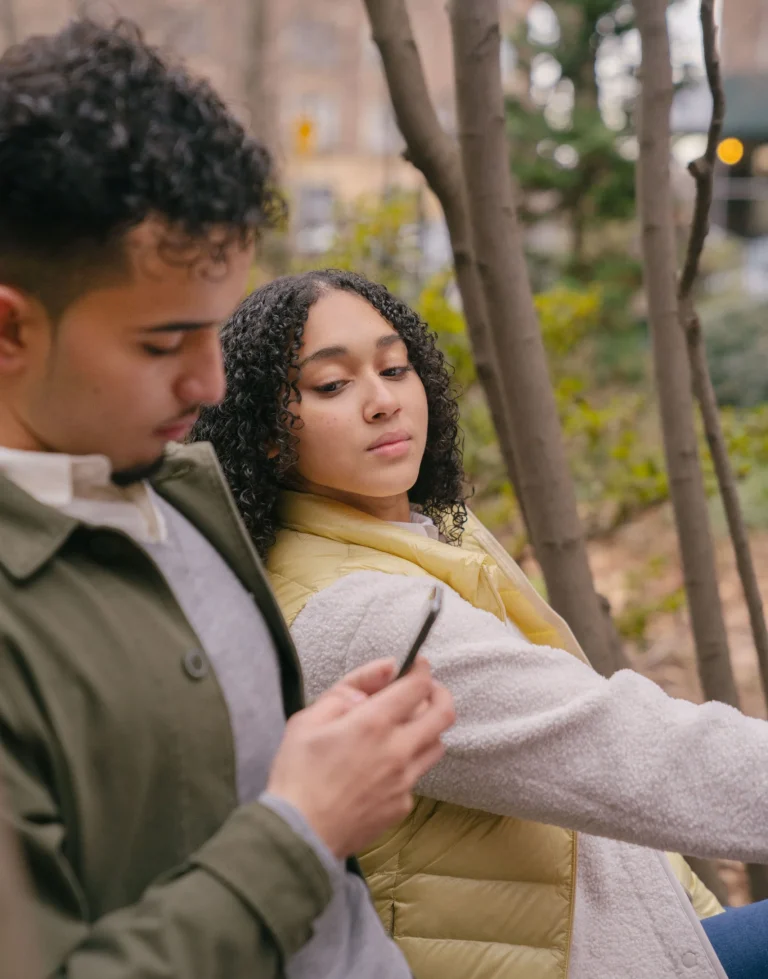
There is something valuable about not knowing exactly what everyone is doing. About having parts of your life that belong only to the people who were there. About making plans without broadcasting them, going somewhere without announcing it, and letting an experience exist without turning it into information for everyone else.
That doesn’t mean people want to be disconnected. If anything, the opposite seems true. People still want to find the small things happening around them—the dinner that comes together at the last minute, the exhibition someone tells you about after work, the pickup game in the park, the DJ playing a tiny room you’ve never heard of, the friend-of-a-friend gathering that becomes the best night of the month.
What has become difficult is finding those things without making everything public in the process.
Modern social life is surprisingly fragmented. Plans live in private group chats. Events live on venue websites. Recommendations disappear into Instagram Stories. Someone knows about something because their roommate knows the organizer. Another person hears about it three days later. There are dozens of ways to discover something to do, but very few ways to understand the social landscape around you in one place.
We have become extremely good at discovering content and surprisingly bad at discovering context.

An algorithm can tell you that a restaurant is popular. It can recommend a song based on everything you’ve listened to this year. It can predict which video you’ll watch next. But knowing that a restaurant is popular doesn’t tell you whether your friends are going there tonight. A list of events doesn’t tell you which ones people you know are actually interested in. A feed can show you what happened five minutes ago, but it doesn’t necessarily help you decide what you should do next.
This is where the next generation of social technology gets interesting.
Flocker, which is preparing to launch, is built around a different understanding of what a social platform can be. Rather than treating social as an endless stream of posts to consume, it puts the emphasis back on activity: what people are doing, where they are going, and what is worth joining.
Just as importantly, it doesn’t assume that being social means being visible to everyone. With Flocker, people can choose to keep their events and correspondence private. You can decide who gets to see what you’re doing, rather than treating every plan as something that needs to become public content.
That distinction matters. Social doesn’t have to mean exposed.
There is a difference between being connected and being watched. Between letting people know what you’re up to and feeling like you have to show everyone what you’re up to. The best social experiences have always had some degree of intimacy around them: the people who were invited, the people who happened to be there, the people who knew where to meet.
Flocker is designed to bring some of that feeling back into a world where almost everything is visible.
And that shift feels increasingly relevant.
For years, the dominant direction of technology has been toward reducing friction. Food comes to us. Cars come to us. Entertainment comes to us. Information comes to us. There is an obvious convenience to all of it, but social experiences don’t always benefit from the same treatment. Some of the value comes from leaving the house, crossing the city, bumping into someone you know, meeting someone you don’t, or deciding at 7:30 that you’re going somewhere you’ve never been before.
There is something particularly appealing about a product that doesn’t ask you to produce more content. You don’t have to build a personal brand, maintain a perfectly curated profile, or document every night out. The point isn’t to prove that you were there. The point is to actually be there and decide for yourself who gets to know about it.
That may be one reason the timing of Flocker feels right. There is a growing fatigue with the performative side of social media: the pressure to keep up, keep posting, and keep watching. At the same time, people haven’t become less social. They have simply become more selective about what feels worth their attention, their time, and their visibility.
The opportunity isn’t another platform competing for that attention.
It’s a platform that helps you spend less of it looking for something to do, while giving you more control over who gets to be part of it.
The most interesting part of a new social product is rarely the technology itself. It’s the behavior it makes possible. Flocker is betting on a fairly simple one: that people still want to make plans, still want to discover their city, still want to meet people, and still want those occasional nights that weren’t carefully engineered in advance.
And maybe they don’t need to be seen by everyone, either.
They just need a better way to find each other.
Keep it public, make it private. Flocker leaves it up to you.